Beyond ChatGPT: Multimodal LLMs & Local Stacks Every Team Should Master
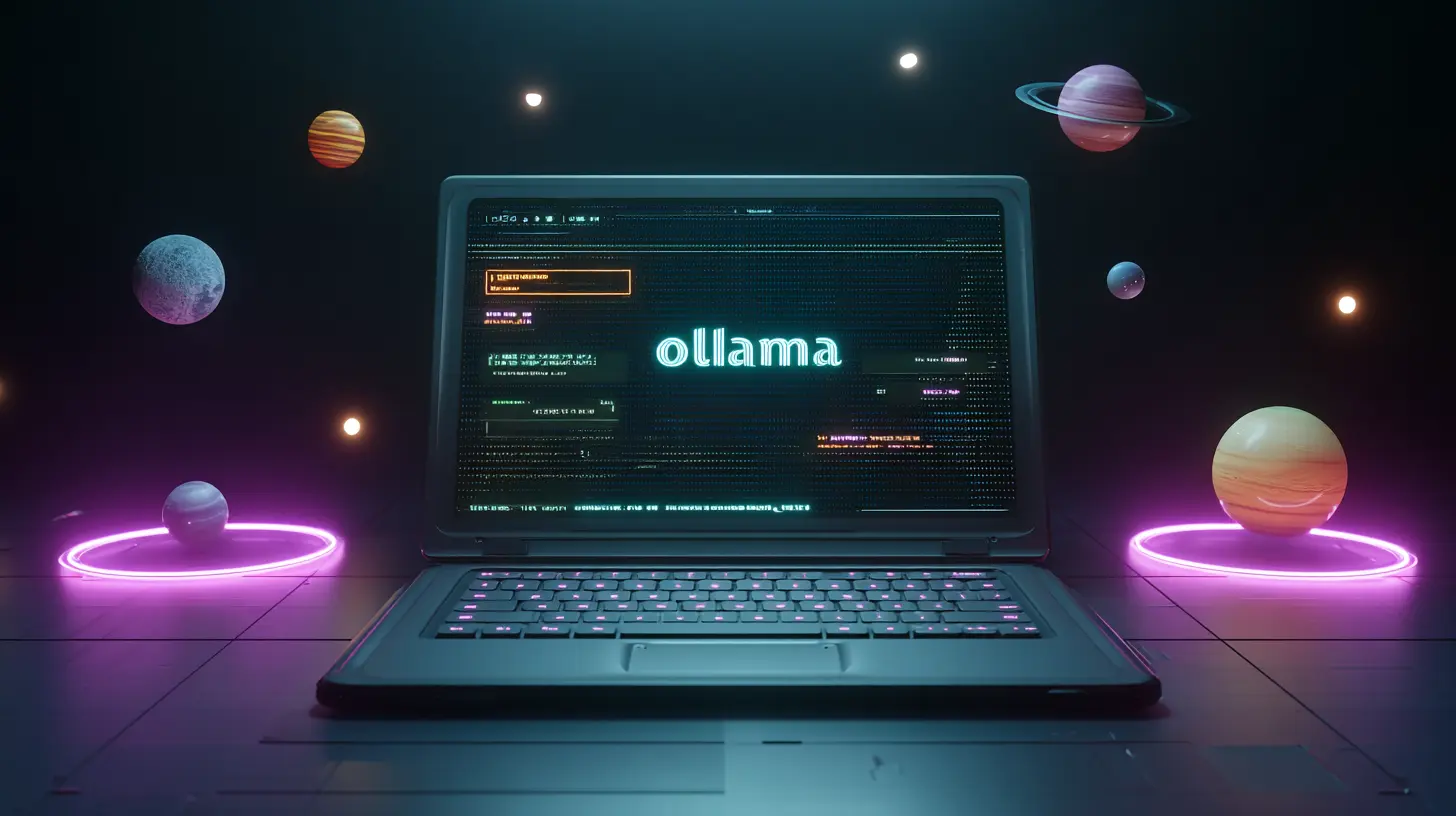
GPT-4o shook the market with real-time vision and voice, Claude 3 pushed context windows toward a million tokens, and Google opened up Gemini 1.5 Pro’s two-million-token API. At the same time, tools like Ollama and LM Studio make high-quality models run offline on a MacBook. This guide shows why multimodality and local deployment are now must-have skills— and how to bring them into your project pipeline.
1. The 2025 Flagships: Multimodal, Massive & Fast
GPT-4o (OpenAI)
Reasoning across text, images and audio in real time and priced 50 % lower than GPT-4 Turbo, GPT-4o is the benchmark for general-purpose SaaS LLMs.
Claude 3 (Anthropic)
Three flavours—Haiku, Sonnet, Opus—all capable of 200 K tokens today and selective 1 M+ token input, with leading long-context recall.
Gemini 1.5 Pro (Google)
First public model to offer 2 million-token context to every developer, plus context-caching for cheaper reruns.
Why multimodality matters
- Richer prompts → better outputs. Screenshots, PDFs or audio notes become direct inputs.
- One model, many jobs. Product copy, alt-text, code review and image description—all in one chat.
- Fewer API hops. Vision + text in a single call slashes latency and cost.
2. Local Stacks: Privacy, Cost Control & Offline Power
Running models locally was niche in 2023; by mid-2025 it’s mainstream. A modern laptop with 16 GB RAM now handles Llama-3 8B at usable latency.
| Tool | Key Strength | Typical Use |
|---|---|---|
| Ollama | One-line install, GPU/CPU, Mac/Windows/Linux | Rapid prototyping, demos |
| LM Studio | GUI over llama.cpp, model catalog, quantization | Non-technical users, prompt testing |
| Text-Generation-WebUI | Web dashboard, RAG & finetune modules | Multi-user servers, experiments |
| GPT-4all | All-in-one installer with curated models | Offline chat, education |
| Wan Q2 | Rust, ARM/edge-optimised, sub-second latency | IoT, on-device inference |
Top local-LLM picks rank in every 2025 tooling roundup.
3. SaaS vs Self-Host: Decision Matrix
| Criteria | SaaS Flagship | Local Model |
|---|---|---|
| PII / compliance | Data leaves org (DPA needed) | Stays on device/server |
| Up-to-date reasoning | Newest weights instantly | Manual updates |
| Cost at scale | Pay per 1 K tokens | Cap-ex GPU + power |
| Context window | 2 M tokens (Gemini 1.5 Pro) | Up to 256 K in Llama-3-MoE |
| Latency | 80–300 ms | < 30 ms on-prem GPU |
Hybrid approach wins. Keep everyday text tasks in SaaS, but serve sensitive knowledge-base queries from a local RAG pipeline.
4. Building a RAG Workflow That Scales
- Chunk & vectorise. Split docs with 512-token overlap; embed via
text-embedding-3-large. - Store locally. Use Chroma/Weaviate with role-based access.
- Query chain. Retrieve top-K → compress → re-rank → pass to local 13B model.
- Fallback. Confidence < 0.6? Escalate to GPT-4o for a second opinion.
5. Enabling the Team: 4-Week Curriculum
- Week 1: Prompt engineering fundamentals + GPT-4o multimodal lab.
- Week 2: Deploy Ollama, load Llama-3 8B, compare outputs.
- Week 3: Build a mini RAG app with local embeddings.
- Week 4: Governance workshop—bias tests, red-teaming and EU AI Act checklist.
6. Six-Month Roadmap
- Q3 2025: Migrate FAQ chatbot to on-prem Llama-3 for privacy.
- Q4 2025: Multimodal ticket triage—images + text into GPT-4o for auto-routing.
- Q1 2026: Company-wide local inference cluster; cost target < €0.002 per 1 K tokens.
Need help choosing the right mix of cloud and local LLMs? Let’s architect a stack that nails compliance, speed and cost.
Schedule a strategy call →